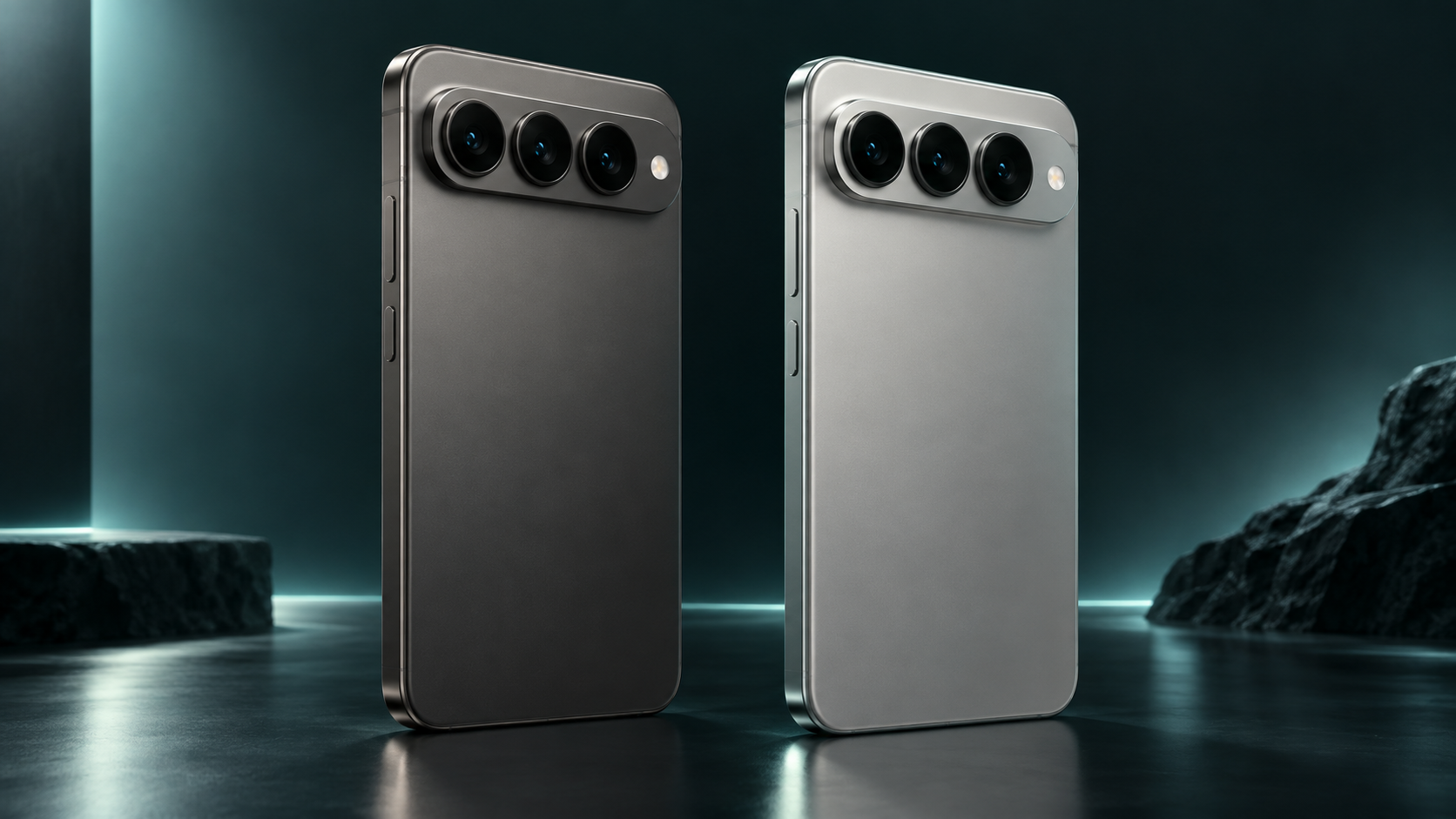
The differences that matter
| Buying question | iPhone 17 Pro | iPhone 18 Pro | What it means to you |
|---|---|---|---|
| US launch price, 256GB | $1,099 in 2025 | $1,199 in 2026 | The $100 difference is between launch prices, not a quote for two phones today. |
| Main camera | 48MP, fixed ƒ/1.78 aperture | 48MP, selectable ƒ/1.48, ƒ/1.8, ƒ/2.8 or ƒ/4.0 aperture | More control over light and depth of field for people who use it. |
| Telephoto | 48MP at 4×; 8× optical-quality crop | 48MP at 4×; 8× optical-quality crop | Do not buy the new model expecting a longer optical reach. |
| Display | 6.3-inch OLED; ProMotion up to 120Hz; up to 3,000 nits outdoors | Same listed size, resolution, refresh rate and outdoor peak brightness | Little reason to switch for the screen alone. |
| Chip | A19 Pro; 6-core GPU | A20 Pro; 7-core GPU | Newer hardware, but these specifications alone cannot tell you how much faster your own apps will feel. |
| Video playback, Apple US estimate | Up to 33 hours | Up to 36 hours | Three additional hours in Apple’s video test; not a promise of three more hours of your everyday use. |
| Wired fast charge, Apple claim | Up to 50% in 20 minutes with a suitable 40W adapter | Up to 50% in about 15 minutes with a suitable 60W adapter | A modest convenience if you often charge just before leaving; adapters are sold separately. |
| Highest storage tier | 1TB | 2TB | Matters chiefly for very large local photo and video libraries. |
| Weight and thickness | 204 g; 8.8 mm | 211 g; 8.8 mm | The 18 Pro is 7 g heavier at the same stated thickness. |
| Entry storage | 256 GB | 256 GB | Base capacity is comparable even though launch prices differ. |
| Ultrawide camera | 48 MP; ƒ/2.2; 120° | 48 MP; ƒ/2.2; 120° | The published resolution and field of view do not increase. |
| Front camera | 18 MP Center Stage; ƒ/1.9 | 18 MP Center Stage; ƒ/1.9 | The stated front-camera resolution stays the same. |
| Dolby Vision video | 4K up to 120 fps on the main camera | 4K up to 120 fps on the main camera | That recording ceiling was already available on the 17 Pro. |
| Video streaming, Apple US rating | Up to 30 hours | Up to 33 hours | A US lab estimate, not mixed-use battery life; other regions differ. |
| MagSafe charging | Up to 25 W; 50% in 30 minutes with suitable gear | Up to 25 W; 50% in 30 minutes with suitable gear | The stated charging gain is wired, not MagSafe. |
| Protection and connectivity | IP68; Wi-Fi 7; Bluetooth 6 | IP68; Wi-Fi 7; Bluetooth 6 | No standard upgrade is listed for these features. |
Figures above are from Apple’s 18 Pro specifications and 17 Pro specifications. Battery figures here are for the US versions; Apple lists different figures on its Spain pages. Both phones have regional model variations, so check the specification page for the country where you buy. Prices are pre-tax US launch prices in Apple’s 2026 and 2025 announcements.
If I already own a 17 Pro, would I pay to replace it?
For most owners, no. The display remains effectively the same on paper, both phones already have a 48MP telephoto with 4× optical zoom, and the 17 Pro already supports demanding photo and video formats. A newer chip is welcome, but Apple’s core counts are not evidence that messaging, maps or ordinary photos will suddenly feel different. This is our buying judgment from the published specifications, not a hands-on speed comparison.
I would consider the 18 Pro if I regularly adjust exposure and depth of field for serious photography. Its variable main-camera aperture and added manual controls are the clearest functional change. The point is control, not a guarantee that every automatic snapshot looks better. Anyone who leaves the camera in auto should look at side-by-side images from trustworthy independent tests before paying to upgrade.
The storage ceiling also changes: 2TB can matter to someone who records large amounts of ProRes video or keeps a huge library offline. It adds little value if 256GB or 512GB already covers your needs. On battery life, Apple’s US video rating moves from 33 to 36 hours. That is useful on paper, but your battery health, network, brightness and apps will shape the real outcome. If battery wear is your only complaint, compare the cost of battery service with the net cost of a new phone.
If I am buying today, which one gives me more for my money?
The 18 Pro launched at $1,199 for 256GB in the US. The 17 Pro launched at $1,099 a year earlier. Those figures show a $100 rise in official launch price; they do not establish today’s price gap. The 17 Pro may now be sold by a reseller, refurbished or used, each with a different warranty and battery condition. We have not collected a comparable set of current offers, so we cannot claim a universal winner on price.
My decision rule would be:
- Get the same storage capacity and compare the total checkout price, including local tax, delivery and any trade-in value.
- If the 17 Pro is substantially cheaper and its warranty and condition are good, choose it unless you know you will use the 18 Pro’s specific camera controls or 2TB option.
- If the final prices are close, the 18 Pro is the more sensible new purchase: it offers the newer chip, longer manufacturer-rated video playback and more charging speed alongside the camera options.
- If you own a 17 Pro already, calculate the actual out-of-pocket upgrade cost after trade-in. A $100 difference between historic launch prices is not your upgrade cost.
Camera, battery and AI: three easy mistakes to avoid
First, aperture control is not the same as guaranteed image quality. It may give a practiced photographer more choices in difficult light or when shaping depth of field. We have not taken test shots, measured noise or compared portraits ourselves.
Second, Apple’s battery numbers are standardized estimates. The 18 Pro’s extra three hours of US video playback and faster claimed wired charging are real specification differences, but they do not predict an individual day of use. Charging claims require appropriate separate accessories. Both models list MagSafe wireless charging up to 25W, so there is no listed wireless-speed upgrade in this pair.
Third, software announcements do not automatically make a feature exclusive to the newest phone. Verify the device, language and region requirements of any AI function you care about before using it as the reason to buy. We have left AI out of the verdict because this comparison has not established an 18 Pro-only capability that changes the purchase decision.
The short answer
Keep a well-functioning 17 Pro. Buy the 18 Pro for the variable-aperture camera and manual controls, for a genuine need for 2TB, or when its actual final price is close to the alternative. Choose a discounted 17 Pro if you mainly need the excellent existing Pro camera, screen and performance, and confirm its condition and warranty. This verdict is based on official documents checked on 28 September 2026; it is not a claim based on independent testing.